


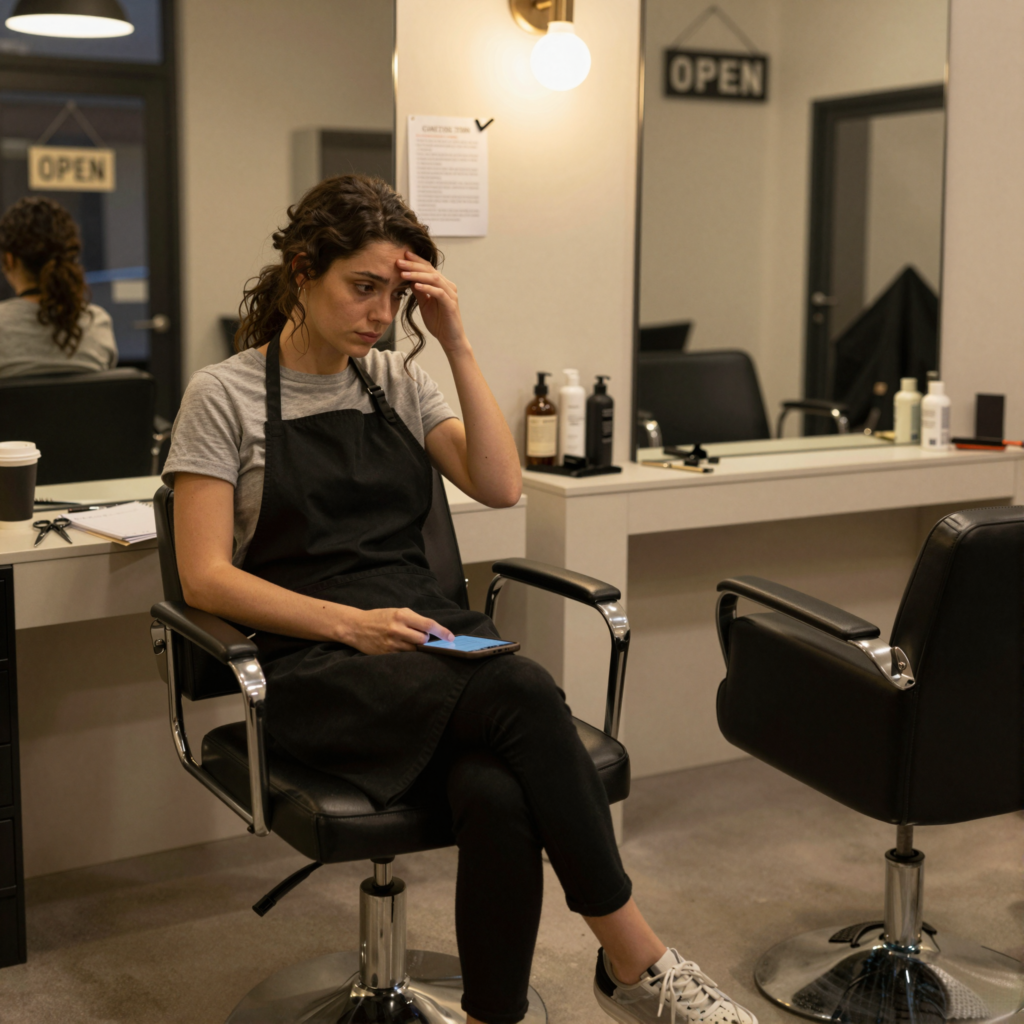
You became a nail tech, a hairstylist, a massage therapist, an esthetician because you loved the craft. You stayed up late learning new techniques. You got excited when your client list grew. You pictured a career built around making people look and feel better.
Nobody told you that 40% of the job would be chasing people who promised to show up and didn’t.
Nobody mentioned the hours you’d spend texting reminders, rewriting cancellation policies, rebuilding your schedule every time someone ghosted, and scrolling through booking software comparison articles at 10 PM wondering which one would finally fix it all.
You were trained to do beautiful work. You were never trained to be a receptionist, a debt collector, an IT administrator, and a marketing department — all at once, all by yourself.
And that gap — between the work you love and the work that drains you — is where most salon owner burnout actually starts.
It’s not the hours. It’s the invisible work.
When people talk about salon owner burnout, they usually point to long hours, physical strain, and difficult clients. Those are real. But they’re not what pushes most owners to the edge.
What pushes you is the work nobody sees.
It’s the Sunday night dread when you open next week’s schedule and start counting the gaps you can already predict. It’s the mid-afternoon silence when the 2:30 doesn’t show and you sit there, in the room you pay rent on, doing the maths in your head. It’s the three WhatsApp threads you’re managing between clients. It’s the paper diary you still keep “as a backup” because you don’t fully trust the app. It’s the Instagram story where you post “fully booked!” while privately calculating this week’s losses.
One salon owner described hitting her limit like this:
“It had got too much. There were too many moving parts and I couldn’t cope.”
Another put it even more bluntly:
“I deleted it because it hurt too much to come to terms with me having fallen out of love with it.”
That second quote should stop you cold. She didn’t leave because the work was bad. She left because the business around the work crushed the joy out of it.
That’s not a burnout story. That’s an infrastructure story.
You’re not bad at business. You were set up without the tools.
Here’s something that almost never gets said in this industry: struggling with the business side of your salon doesn’t mean you’re bad at business.
It means you were handed a craft and expected to build a company with no systems, no training, and no safety net.
Think about what your average week actually involves beyond the chair. You’re manually confirming appointments. You’re texting reminders and hoping people reply. You’re chasing clients who cancelled last minute to see if they’ll rebook. You’re rewriting your cancellation policy for the fourth time. You’re comparing software options. You’re dealing with the emotional weight of being stood up by people who were supposed to be sitting in front of you.
None of that is what you trained for. And none of it needs to be done by hand.
“When clients fail to turn up to their appointments then I do not earn. If I do not earn then I can not pay my bills.”
That’s not a scheduling complaint. That’s a survival statement. And it comes from a professional who is excellent at her craft but was given zero infrastructure to protect her income.
You wouldn’t expect a builder to construct a house without tools and then blame her when the walls are crooked. So why blame yourself for struggling with business operations you were never equipped to handle?
The software graveyard
If you’ve been at this for a while, you probably have a trail of abandoned software behind you. A Fresha account you outgrew. A Vagaro trial you never finished setting up. A Square integration that handled payments but couldn’t actually run your salon. An Acuity link you shared for a few months before giving up.
Sound familiar?
You’re not alone. And you’re not bad at technology.
The pattern goes like this: you hear about a platform. You sign up for the free trial. You spend an evening trying to configure it. You get halfway through and something doesn’t work the way you expected — maybe the deposit settings are confusing, maybe the reminders aren’t customizable enough, maybe the interface feels like it was designed for a 20-chair salon with a front desk manager. You close the tab. You tell yourself you’ll finish it this weekend. You don’t.
Three months later, you download something else and start over.
The problem isn’t you. It’s that most salon software is built for a business that doesn’t look like yours.
“Constantly paying extra for features that seem like they should be standard.”
That quote captures the frustration perfectly. You’re paying for 100 features and using 15 of them. The other 85 don’t just go unused — they make you feel inadequate. Like the software was built for a more sophisticated operator, and you’re not keeping up.
Here’s what most platforms get wrong: they try to be everything for everyone. They build for the 20-chair salon with a receptionist and a manager and a marketing team. Then they slap a “Solo” plan on the pricing page and call it done.
But a solo operator renting a room doesn’t need 30 features. She needs three:
- Clients get reminded automatically
- No-shows get charged
- The calendar fills itself without phone calls
Everything else is noise.
The “personal touch” trap
There’s a belief that runs deep in this industry: that doing things manually is better service. That texting a reminder yourself is more personal than an automated message. That handling bookings by phone means you care more than a salon with an online system.
It feels true. It isn’t.
Your clients don’t care who sends the reminder. They care that they get one. And every minute you spend typing “Just a reminder about your 2pm tomorrow!” is a minute you’re not doing the work they actually come to you for.
The personal touch isn’t in the reminder text. It’s in the service. It’s in remembering their preferences. It’s in the greeting when they walk in. It’s in the quality of the work you do with your hands.
The admin — the reminders, the confirmations, the deposit collection, the schedule management — that’s infrastructure. And infrastructure should run quietly in the background so you can focus on the part that actually makes your business special.
Think of it this way: a restaurant doesn’t become “less personal” because it uses an online reservation system instead of answering every phone call. It becomes more professional. And the chef gets to cook instead of standing by the phone.
You’re the chef. Stop standing by the phone.
What getting your evenings back actually looks like
The salon owners who’ve made this shift don’t describe becoming more corporate or less personal. They describe something simpler: they got their time back.
Instead of texting reminders manually, the system sends them automatically — 24 hours before, with the appointment details, your address, and a link to confirm or cancel. Done.
Instead of awkwardly asking for card details over the phone, the deposit is collected at booking. Seamlessly, automatically, as part of the normal flow. The client doesn’t think twice about it. Neither do you.
Instead of rebuilding your schedule after every no-show, you open your calendar and trust what’s in it. Because the people who booked actually committed.
Instead of scrolling forums at 11 PM reading other owners’ cancellation horror stories, you close your phone and go to sleep. Because the system is handling the thing that kept you up.
“At the end of the day you are running a successful business and a business cannot run on no-shows and cancellations.”
You are running a real business. Whether it’s from a rented room, a shared space, or a full shopfront — it’s real. And it deserves real tools.
You didn’t fall out of love with your craft
If you’ve been feeling burnt out, exhausted, or quietly wondering whether you made the right career choice — take a breath.
The fatigue you’re carrying probably isn’t about the work itself. It’s about the invisible weight around the work: the chasing, the calculating, the worrying, the manual labour of running a business without systems.
You didn’t fall out of love with doing nails, or cutting hair, or the look on someone’s face when they see themselves after a good appointment. You fell out of love with being a one-person admin department on top of it all.
That part is fixable. And it doesn’t require becoming a different person. It requires the right infrastructure — set up once, running quietly, protecting your time and income so you can go back to the reason you started this in the first place.
The craft is still there. It’s just buried under admin that shouldn’t be yours.
Try Appointible free — set up in minutes, not weeks →
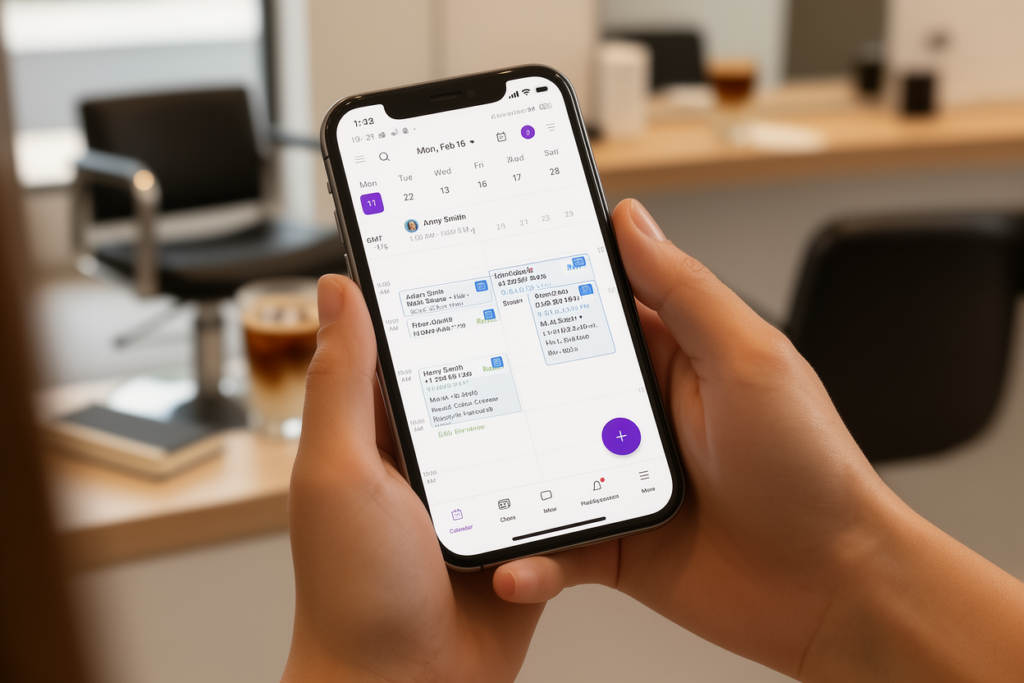
Appointible is booking software built for beauty and wellness professionals who work alone or in small teams. Automated reminders, deposits at booking, real-time online scheduling, rooms management, and a mobile app you can check between clients. Simple to set up. Nothing you won’t use.
Related reading: